

When the World Gets Too Loud
There was a time when the world around me was so loud that I couldn’t hear my own voice anymore. Growing up, my childhood was heavy, filled with constant noise, criticism, and blame. I was told who I should be, how I should act, and what I should feel. Slowly, I stopped liking who I truly was. Every judgment, every harsh word became another layer of noise that trapped me inside my own mind.
As I entered adulthood, that noise grew louder. I was surrounded by people’s opinions, expectations, and comparisons. I tried to please everyone, to fit into every mold, but with each attempt, I lost a little more of myself.
Then, when I was 18, something extraordinary happened, I discovered Vipassana meditation. That single moment marked the beginning of my spiritual journey, a journey from chaos to clarity, from noise to stillness.
The Beginning of My Spiritual Journey
When I first heard the word Vipassana, I didn’t understand what it meant. Later, I learned it’s an ancient Buddhist meditation technique meaning “to see things as they really are.” Unlike other practices that involve chanting or visualization, Vipassana focuses purely on observation, watching sensations, emotions, and thoughts without reacting to them.
At 18, I enrolled in a 10-day Vipassana course. The retreat required complete silence, no talking, no phones, no reading, no writing. At first, it felt impossible. My mind screamed louder than ever, craving distraction. But as the days passed, something within me began to soften.
From 4:30 a.m. to 9:00 p.m., we practiced awareness, simply observing the natural rhythm of our breath and sensations within the body. The silence became my greatest teacher. For the first time in my life, I experienced what stillness truly meant, not the absence of sound, but the presence of awareness.
My heart felt lighter, as though years of heaviness had melted away. I gained clarity about who I really was and what I genuinely wanted in life. I realized that I am not my body or my thoughts. I am the consciousness that observes everything, the silent witness that remains unchanged amidst all experiences.
Understanding the Nature of the Mind
The mind has a fascinating nature, it constantly seeks pleasure and avoids pain. It clings to what it likes and resists what it dislikes. This endless cycle of craving and aversion keeps us trapped in restlessness.
Vipassana teaches the opposite, equanimity, or balance of mind. It’s about neither craving pleasure nor rejecting pain. Instead, you learn to simply observe everything, every sensation, emotion, and thought, with detachment and compassion.
Through this practice, I learned that the mind’s storms always pass. Anger comes and goes, joy comes and goes, sadness comes and goes. They are all waves on the surface, and I am the ocean beneath them, calm and infinite.
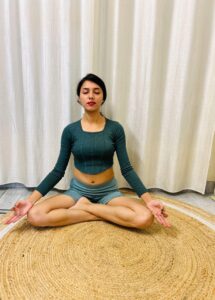
The Power of Stillness
When I returned from the 10-day retreat, the world around me was just as noisy. But I was no longer the same. I had found a quiet strength within myself that no external chaos could disturb.
That stillness became my source of empowerment. Today, when I stand before a camera as a SereniPose model, I carry that same inner calm. Between every pose and breath, I feel grounded and aware. Modeling has transformed from performance to meditation in motion, an expression of inner grace.
True empowerment, I learned, isn’t about being loud, perfect, or constantly strong. It’s about being present, centered, and compassionate toward yourself, even when life feels overwhelming.
How to Incorporate This Mindfulness Technique Into Your Daily Flow
You don’t need a retreat to experience mindfulness, you can start right where you are. Try these simple steps:
- Morning Stillness: Begin your day with five minutes of quiet breathing. Sit comfortably, close your eyes, and observe your natural breath without trying to control it.
- Mindful Observation: Throughout the day, notice your body’s sensations, warmth, tightness, or tingling, without labeling them as good or bad.
- Moments of Silence: Take short pauses between activities. Put down your phone, breathe deeply, and simply observe what’s happening within you.
- Evening Reflection: Before bed, spend a minute in gratitude. Reflect on what emotions visited you today, then gently let them go.
When you weave mindfulness into your everyday rhythm, you begin to carry stillness with you, even in the busiest crowds or most demanding moments.
Reflect, Act, and Embrace Self-Love
To deepen awareness, keep a mindfulness journal. Divide each page into three columns:
- Thoughts
- Emotions
- Behavior
Whenever you have time, jot down what’s happening in your mind, whether it’s positive, negative, or neutral. This simple practice helps you track your mental patterns and observe them clearly.
For action, bring awareness to every task. Whether you’re walking, cooking, or getting ready, give your full attention to that single activity. When you experience strong emotions, such as fear before a big shoot, pause. Notice where the fear lives in your body. Maybe it’s a tightness in your chest or a flutter in your stomach. Just observe it, without trying to change or resist it.
And most importantly, practice self-love. No matter what your mind says, whether it praises or criticizes you, remember: you are not your mind or your body. You are something far greater. You are a soul filled with love, compassion, forgiveness, power, acceptance, and abundance.
Your true Self is divine, the essence of God within you. Always honor that truth. Always love yourself.