
 Consistency is often praised as the secret to growth, while inconsistency is quietly labeled as failure. In yoga, however, both are part of the same conversation. Some days, our practice feels strong, fluid, and focused. On other days, we struggle to roll out the mat at all. Yoga does not ask for perfection or rigid discipline. Instead, it invites us to show up honestly, meeting ourselves exactly as we are.
For women navigating busy lives, creative careers, or the ever-changing demands of modeling and wellness work, this truth is especially powerful. Yoga becomes less about maintaining an unbroken streak and more about building a relationship with movement, breath, and self-trust. At SereniPose, we view consistency not as pressure, but as devotion. Inconsistency is not something to fear; it is information, a quiet message asking us to listen more closely.
Consistency as a Living Practice
Consistency in yoga does not mean practicing the same poses every day or forcing yourself onto the mat when your body is exhausted. True consistency is about intention. It is the gentle commitment to return, again and again, even when the practice looks different than expected.
In yoga philosophy, this idea is reflected in the concept of abhyasa, which means steady effort over time. Abhyasa teaches us that progress comes from patience and repetition, not intensity alone. A short, mindful practice can be just as powerful as a long, physically demanding one.
Inconsistency as a Teacher
Inconsistency often carries guilt, but yoga invites us to see it differently. Missed practices, uneven motivation, or fluctuating strength are not signs of failure. They are reflections of our current season.
There are days when the body asks for stillness instead of movement, or when the mind needs rest more than focus. Listening to these signals is a form of wisdom. In yoga, this awareness is called svadhyaya, or self-study. Through observation, we learn why our practice shifts and what we truly need.
A yoga model once reflected, “When I stopped judging my inconsistency, I started understanding my body. That’s when my practice deepened.” Inconsistency, when met with compassion, becomes a guide rather than an obstacle.
Movement That Adapts With You
Yoga offers endless ways to honor both consistency and inconsistency through adaptable movement. Instead of rigid routines, consider flowing sequences that evolve with your energy.
A simple grounding flow might include:
Gentle Morning Flow
- Begin with Tadasana (Mountain Pose) to establish balance and breath.
- Move into Uttanasana (Forward Fold) to release tension.
- Step back into Anjaneyasana (Low Lunge) to open the hips and legs.
- Return to standing and close with Vrksasana (Tree Pose) to cultivate focus.
This sequence can be expanded on energetic days or shortened when time is limited. The key is responsiveness, not rigidity. Yoga teaches us that consistency lives in showing up with
awareness, not forcing sameness.
The Intersection of Yoga, Fashion, and Presence
For models and creatives, yoga often becomes a bridge between physical expression and inner stillness. Fashion demands presence, posture, and confidence, qualities that yoga naturally
cultivates.
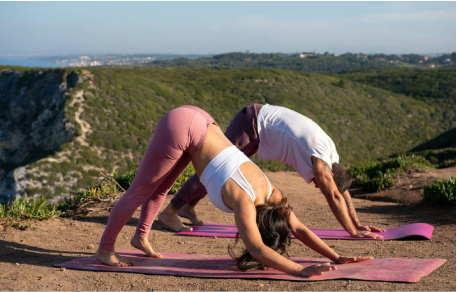
What we wear during practice also shapes how we feel. Soft, breathable fabrics allow freedom of movement, while clean, elegant silhouettes encourage confidence and ease. Yoga fashion is not about performance, but about alignment, clothing that moves with you, not against you.
When movement feels supported, practice becomes more inviting. This subtle harmony between body, breath, and attire reinforces consistency without pressure. It reminds us that showing up can feel beautiful, not burdensome.
How to Incorporate This Into Your Daily Flow
Consistency does not require dramatic change. Small, intentional habits create sustainable rhythm.
- Choose a realistic practice length, even ten minutes counts.
- Keep your mat visible as a gentle reminder, not an obligation.
- Rotate between active flows and restorative poses.
- Wear clothing that makes you feel comfortable and confident.
- Release judgment when routines shift.
By allowing flexibility, consistency becomes something you return to willingly, not something you force.
Yoga teaches us that both consistency and inconsistency belong. One builds strength, the other builds awareness. Together, they shape a practice rooted in honesty and self-respect. Wherever you are in your journey, trust that every return to the mat matters. Progress is not measured by perfection, but by presence. Show up as you are, and let that be enough.